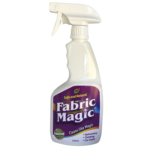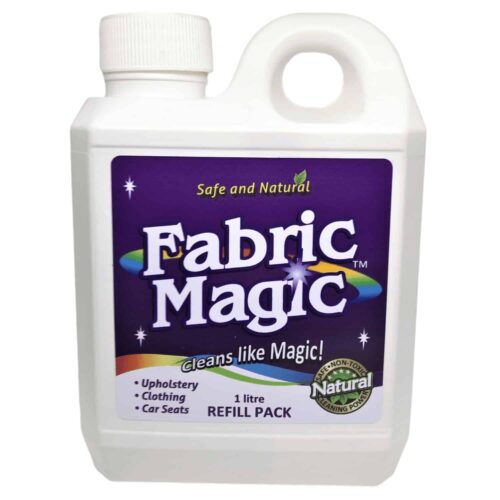


Frequently Asked Questions: Fabric Magic Upholstery Spot Cleaner & Stain Remover
What kind of stains does Fabric Magic handle best and why?
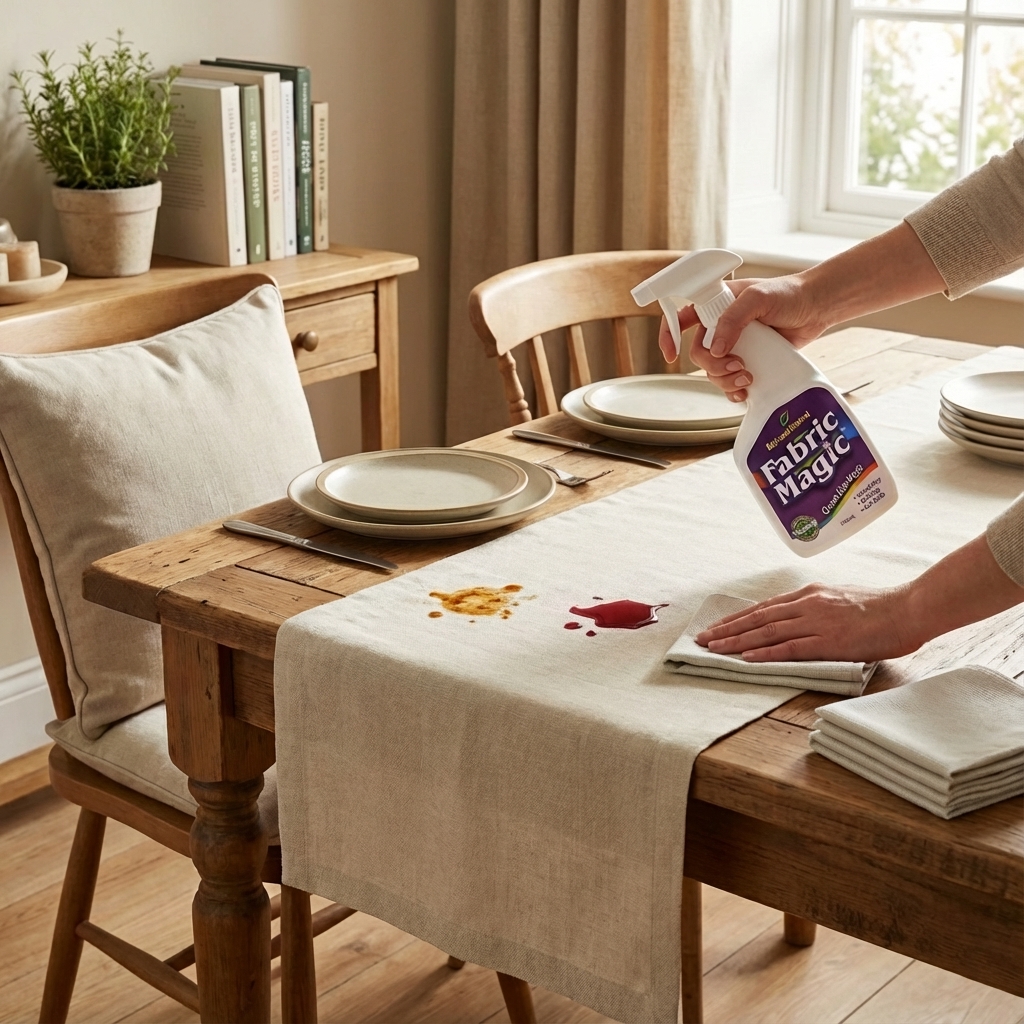
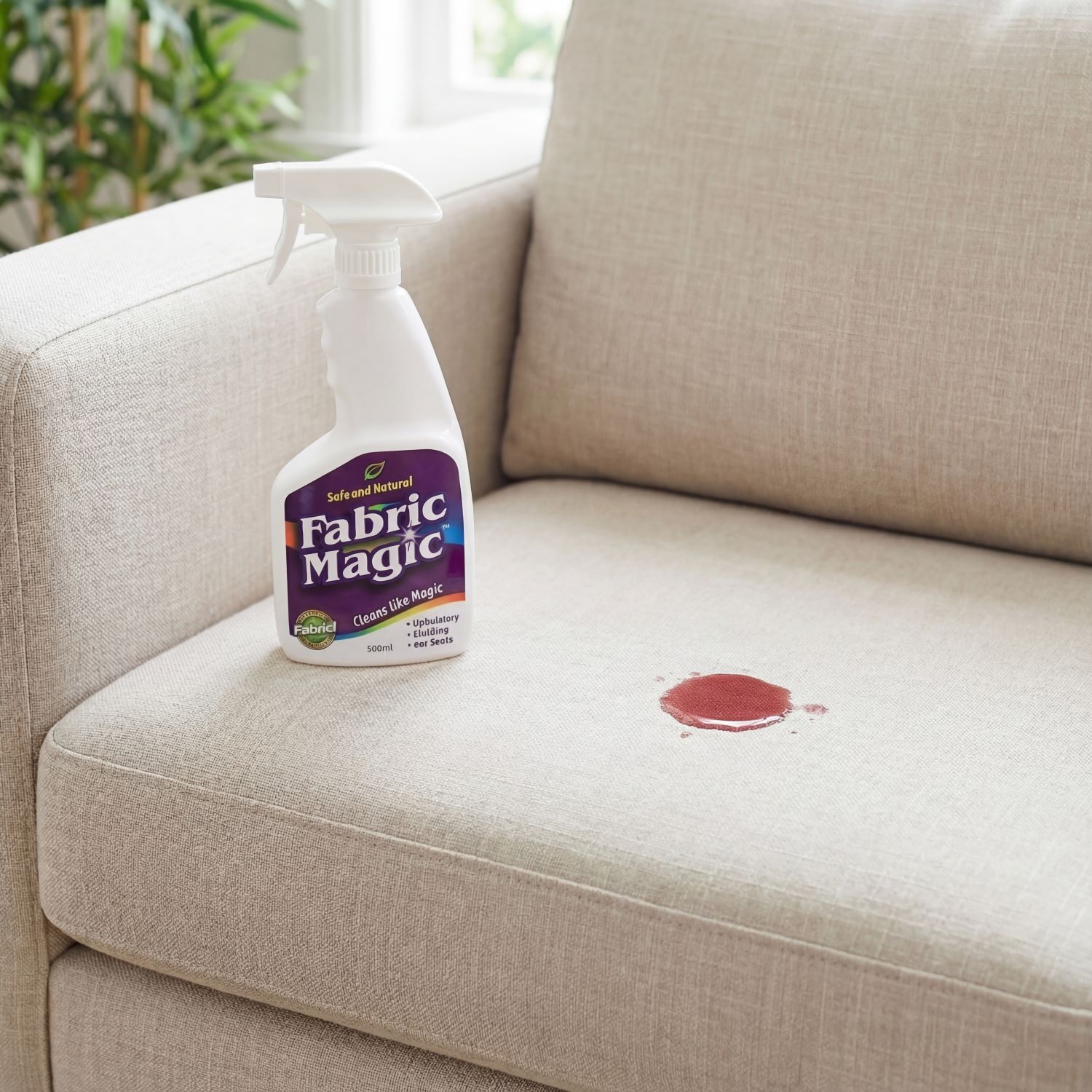
Fabric Magic is designed for everyday “spot” problems such as wine, blood, oil/grease, food staining, biro, chocolate, smoke stains, toner, and general soiling. The reason spot cleaners work well on fresh spills is that the contaminant is still sitting near the fibres surface, so a gentle cleanser can lift and transfer it into a cloth before it bonds deeper into the fibre yarns.
How do I use Fabric Magic on upholstery or car seats without creating water rings?
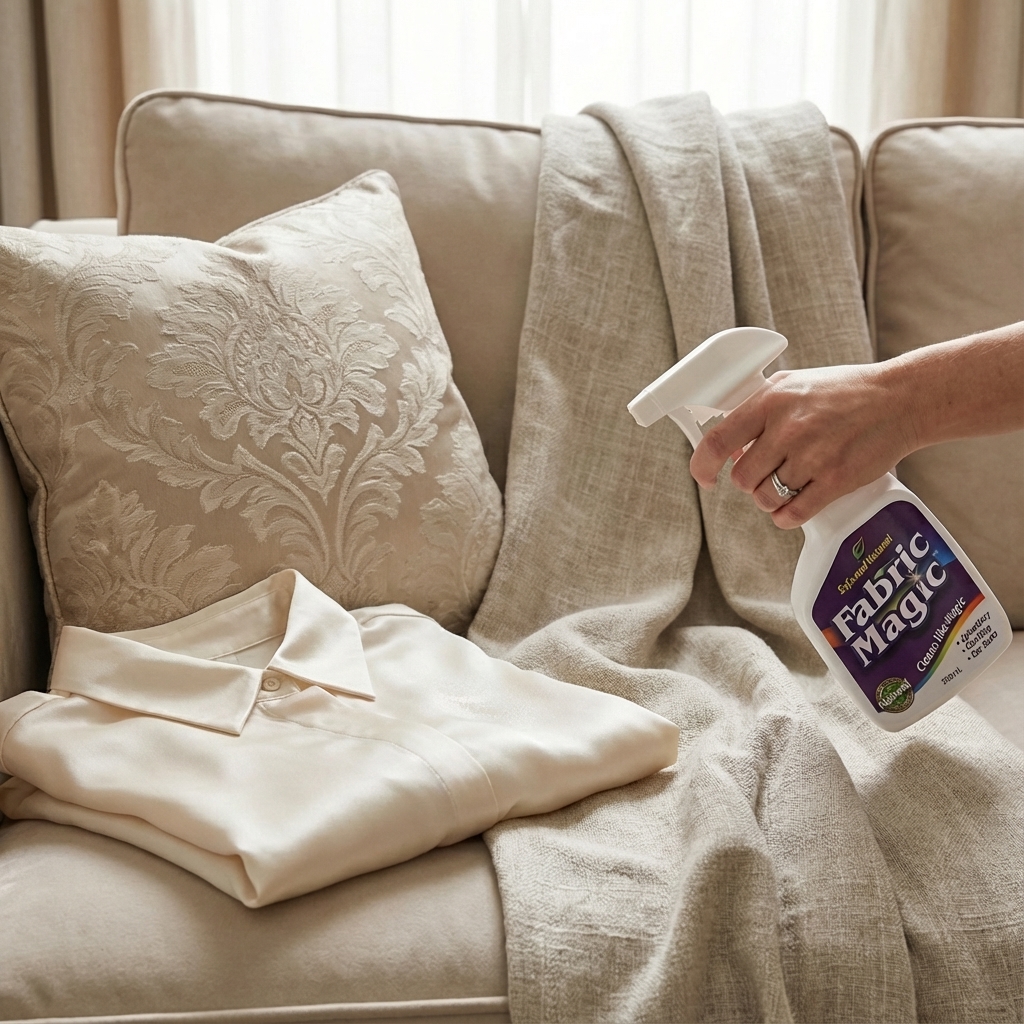
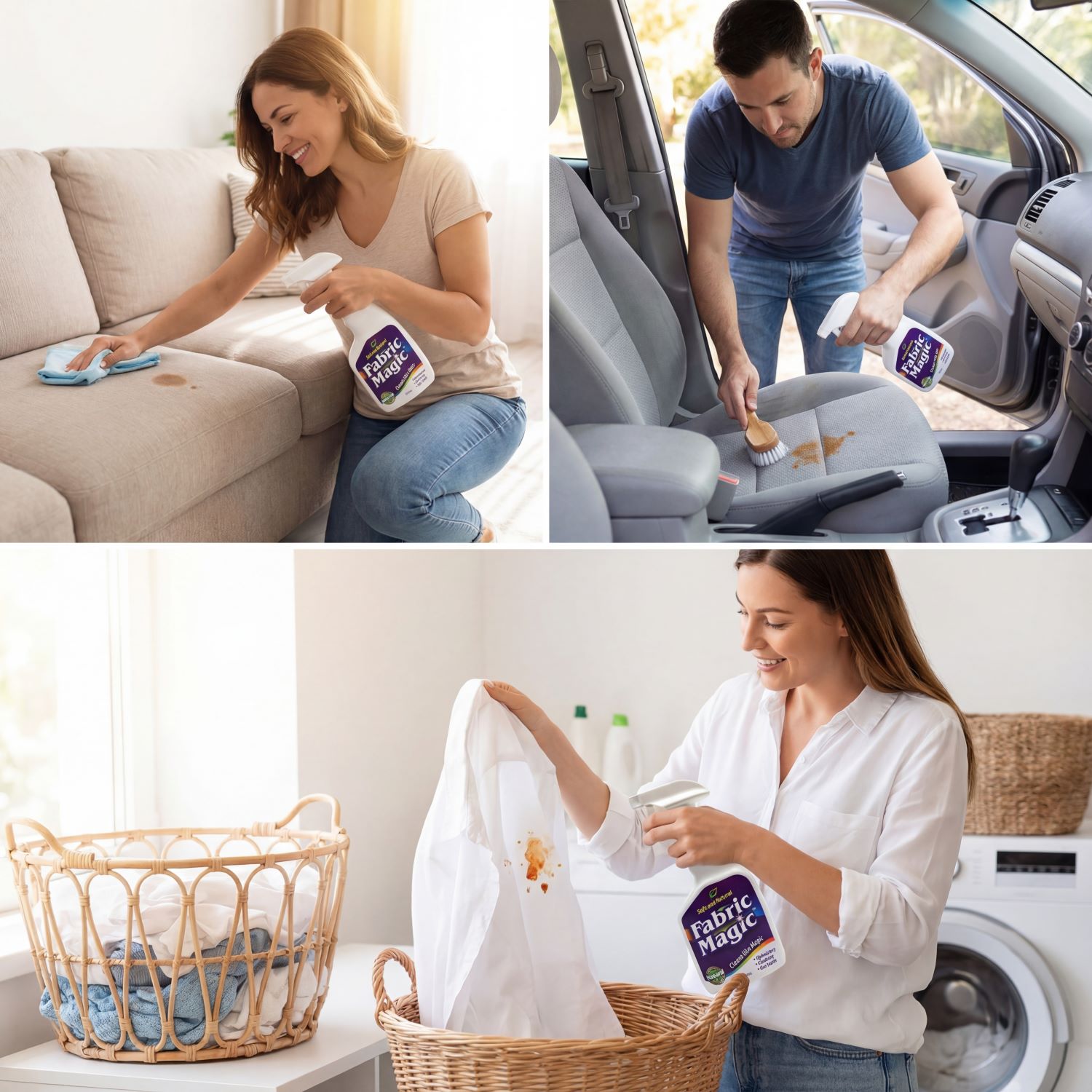
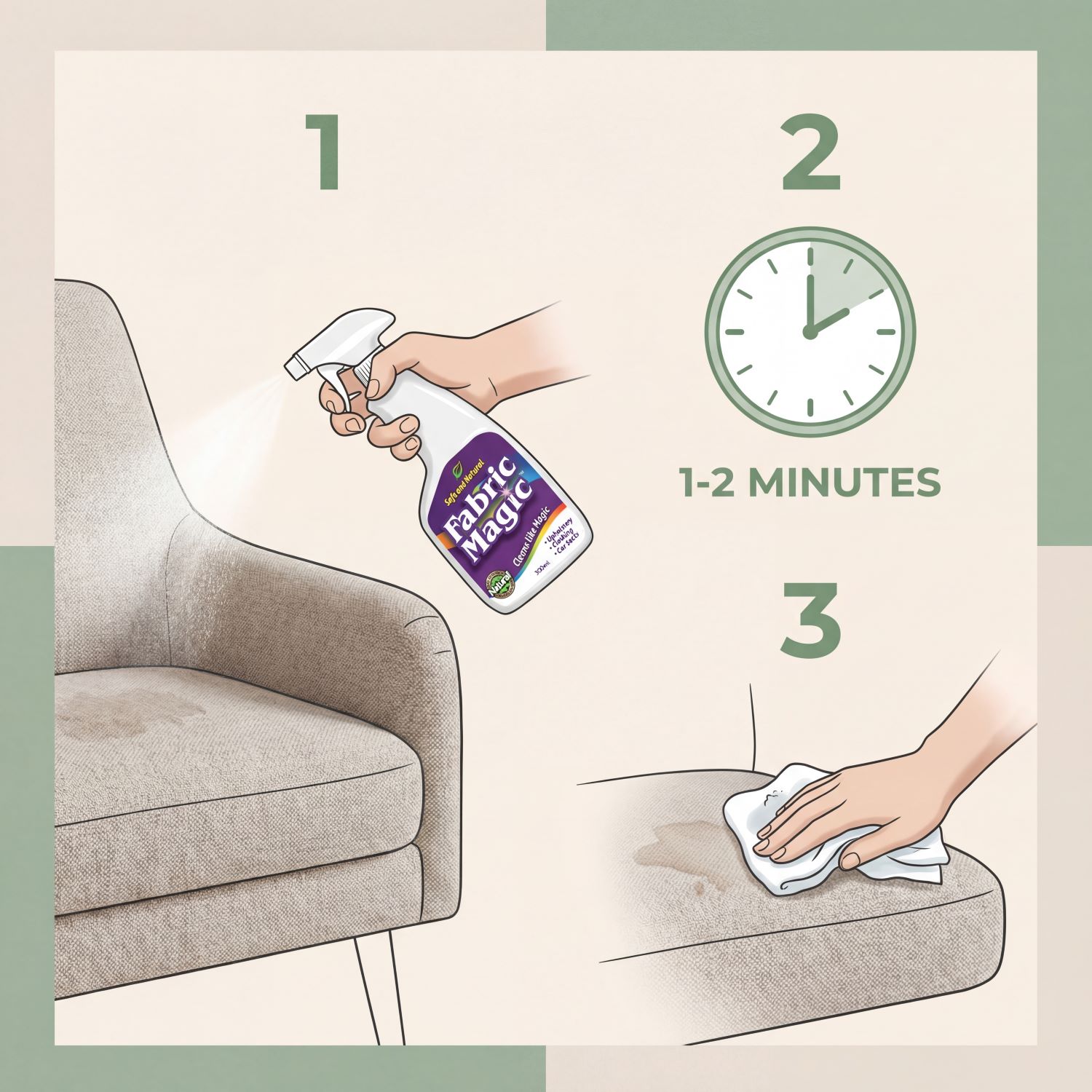
Lightly spray Fabric Magic onto the stain, wait about 1–2 minutes, then gently wipe with a lightly damp cloth, avoid heavy rubbing. To prevent watermarks, lightly clean “panel by panel” from seam to seam, not just a small circle around the stain, because partial wetting can leave a visible edge where soils and moisture re-deposit as the fabric dries.
Should I blot, wipe or scrub a stain?
For most upholstery stains, blotting and gentle wiping are the safest approach because aggressive scrubbing can distort the pile, roughen fibres, or remove colour on fabrics with unstable dyes. The product directions explicitly warn against heavy rubbing to reduce the risk of fabric damage or colour removal. If a stain is thick (e.g., sauce), lift solids first with a blunt knife or a spoon, then spray and wipe.
When should I not use Fabric Magic on a fabric surface?
Avoid using Fabric Magic on materials that are not meant to be wet-cleaned (for example, “dry-clean only” upholstery codes or delicate trims) unless a spot-test proves the fabric remains stable. Even with gentle products, some fabrics (especially highly water-sensitive cellulosics or poorly set dyes) can change texture, sheen, or colour when moisture and wiping are introduced. A small hidden test area is the best way to confirm safety before treating a visible panel.
Can Fabric Magic fix bleaching, sun fading, or colour loss?
Fabric Magic can remove many soils and spill-based stains, but no spot cleaner can reverse dye loss, bleaching, or UV fading because those problems are pigment damage rather than removable contamination. If a “stain” looks lighter than the surrounding fabric after cleaning, that usually indicates colour has been stripped or faded and the solution is repair (re-dyeing, panel replacement, or professional restoration), not more cleaning.
What’s the best approach for oily or greasy stains on upholstery?
Oil and grease often spread beyond what’s visible, so a small “target clean” can leave a halo even if the centre improves. Treat the whole section seam-to-seam as recommended and use repeated light applications rather than one heavy soak to avoid over-wetting the cushioning and adhesives beneath the fabric. After wiping, allow airflow (fan or open windows) so the panel dries evenly.
How do I use Fabric Magic as a pre-wash treatment for clothing?
Apply Fabric Magic to the stained area before washing, allow time for the product to penetrate, then wash as normal. Penetration time matters because it lets the cleanser move into the fibre bundle where staining sits, which improves removal once agitation and rinse water in the wash cycle do the heavy lifting.
What mistakes cause “clean spots” or patchy results on upholstery?
The most common mistake is cleaning only the stain and not the whole panel, which can leave a tideline or a visibly cleaner circle. The second is rubbing hard, which can flatten nap (especially on chenille or jacquard) and make the cleaned area look different even when the stain is gone—Fabric Magic’s directions specifically advise against heavy rubbing. A third mistake is over-wetting: too much liquid can push soils deeper and slow drying.
How does Australian climate affect spot-cleaning results humidity, coastal air, heat?
In humid conditions, upholstery dries slower, which increases the chance of watermarks or musty odours if cushions stay damp—use lighter applications and improve airflow so panels dry promptly. In coastal areas, airborne salts can make fabrics feel grimy faster, so seam-to-seam panel cleaning can look more even than isolated spot-treating. In very hot rooms, cleaners can dry too quickly on the surface; working in smaller sections helps prevent uneven drying lines.
In professional furniture care, when is DIY spot cleaning the wrong call?
Professional restorers typically stop DIY cleaning when stains are large, old/set-in, or when the fabric shows dye transfer during a patch test, because repeated wiping can spread colour loss or create permanent texture change. Another “call a pro” scenario is contamination that has reached the foam (odours, deep spills), where surface cleaning alone won’t fully resolve the problem and controlled extraction/drying is needed. Fabric Magic is intended as a gentle spot solution, but some problems are structural (padding, dyes, wear) rather than removable surface soil.
⚠️ Disclaimer:
Always test in an inconspicuous area before full application. Results may vary depending on furniture age, fabric type and fabric cleaning instructions provided by the fabric manufacturer. Aussie Furniture Care is not responsible for damage caused by incorrect use.
Fabric Magic is simple and easy to use with easy to follow instructions.
INSTRUCTIONS
UPHOLSTERY & CAR SEATS
(1) Lightly spray Fabric Magic onto stain or area to be cleaned then allow to work for around 1-2 minutes.
(2) Use a lightly damp cloth and gently wipe over the stain to remove the problem. No heavy rubbing as his could lead to fabric damage or colour removal.
(3) To avoid watermarks make sure you clean one panel at a time from seam to seam not just one small area.
CLOTHING
Before washing apply Fabric Magic to the stain and allow some time for it to penetrate into the problem, then wash as normal.